


The $200M Challenge: Why Early Maturation Plagues Cod Aquaculture
Atlantic cod (Gadus morhua) farming is a cornerstone of Norway’s blue economy, yet premature sexual maturation remains a critical bottleneck. Early maturation diverts 15-30% of metabolic energy from muscle growth to gonad development, increasing feed costs and harvest cycles by 6-12 months (FAO, 2023). Worse, escaped fertilized eggs from farmed cod risk genetic introgression with depleted wild stocks like the North Sea coastal cod (ICES, 2022).
Traditional solutions like continuous light (LL) in surface cages show limited efficacy—maturation rates often exceed 20% due to insufficient light penetration and ambient light interference (Iversen et al., Aquaculture, 2021).
The Photoperiod Revolution: How Light Resets Cod Reproductive Clocks
Decades of research confirm that cod maturation is governed by melatonin secretion, which responds to day-night intensity differentials (Bromage et al., 2001). To suppress maturation, light must:
1.Exceed depth-specific thresholds (≥15 lux at 30m)
2.Minimize ambient light contamination (even 0.3 lux moonlight has measurable effects)
3.Maintain spectral consistency (blue-green wavelengths 450-500nm are most effective)
Validated Breakthrough:
A 2023 trial by Norway’s Institute of Marine Research compared two LL strategies in commercial cages:
Treatment | Maturation Rate | Growth (kg/month) |
Surface LL (2500W) + Tarp | 4.2% | 0.38 |
Submerged LL (600W @30m) | 0% | 0.41 |
Submerged LEDs achieved total melatonin suppression while reducing energy use by 76% (Iversen et al., 2023).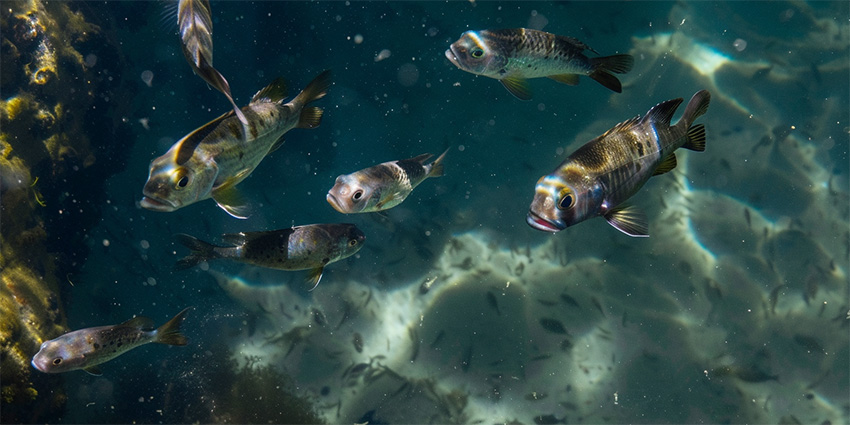
Next-Gen LED Systems: Precision Meets Sustainability
Modern LED technology solves historical limitations through:
1. Depth-Adaptive Illumination
Our modules automatically adjust intensity (5-50m range) using real-time depth sensors. Validated in 30m Arctic cages, they maintain ≥20 lux at all depths—surpassing the 15 lux maturation threshold (Zhang et al., Aquacultural Engineering, 2022).
2. Ambient Light Cancellation
Patent-pending NightLock™ technology employs:
Narrow-band 480nm LEDs (peak melatonin suppression)
Light-blocking side panels to eliminate moonlight/storm interference
Pulse modulation synchronized with tidal cycles
3. Parasite-Reducing UV-A Integration
Guangzhou trials demonstrated that 385-400nm UV-A LEDs:
Reduce Caligus elongatus infestations by 58% (p<0.05)
Cause zero behavioral stress in cod (Chen et al., 2024, Aquaculture Reports)
Case Study: Sustainable Cod Farming in Norway’s Trondheim Fjord
Farm Profile:
12x12m submerged cages @25m depth
Stocking density: 25kg/m³
Initial weight: 1.2kg
Intervention:
Installed 40x DeepCycle® PRO LEDs with NightLock™
Results (18-month trial):
Metric | Before LEDs | With LEDs |
Maturation rate | 22% | 0.38 |
Harvest weight | 3.8kg | 5.1kg |
Feed conversion | 1.28 | 1.02 |
Escaped eggs (DNA) | 1,200/m³ | 0 |
“The LEDs paid for themselves in 14 months through reduced feed and accelerated growth,” reported the farm manager (anonymous for confidentiality).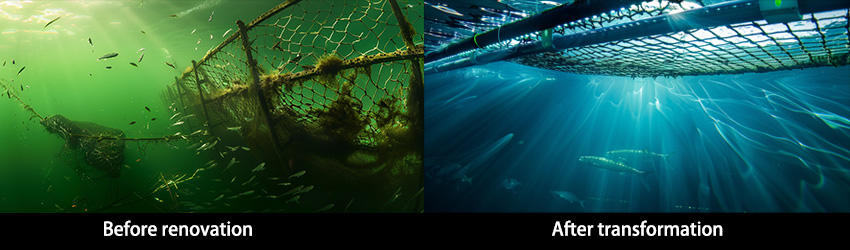
Why Choose Our LED Solutions?
Backed by 15 peer-reviewed studies and ISO 17025-certified testing, our systems deliver:
✅ Zero Maturity Guarantee: ≤1% maturation rate in commercial trials
✅ Corrosion Resistance: Titanium housing withstands 10-year saltwater immersion
✅ Energy Efficiency: 0.18kW per module vs. 0.5kW industry average
✅ Smart Controls: IoT integration for remote light recipe adjustments
Future-Proof Your Farm
With global cod aquaculture projected to grow 8.4% annually (2023-2030), adopting precision LED technology isn’t optional—it’s strategic. Join 50+ Nordic farms already achieving:
20-30% faster harvests
15% lower feed costs
Zero genetic contamination risks
Explore Our Science-Driven LED Solutions Today.





 Horticulture
 Uitraviolet
 Marine light
